
Copyright & Saved Recipes
Articles in this section
🚀 Getting Started
📥 Importing Recipes
- How to Import Recipes
- Import from a Website
- Import from Instagram
- Import from Facebook
- Import from TikTok
- Import from Pinterest
- Import from YouTube
- Scan a Recipe from Photo
- Dictate a Recipe by Voice
- Import by Pasting Text
- Use the In-App Browser
- Write a Recipe from Scratch
- Review & Edit Before Saving
- Understanding Import Credits
📂 Managing Recipes
👨🍳 Cooking Mode
📅 Meal Planning
🛒 Grocery List
📤 Sharing & Export
💳 Billing & Subscription
⚙️ Account & Settings
ℹ️ About Cookonut
💡 Ideas & Feedback
When you save recipes from websites, social media, or other sources, it’s natural to wonder about copyright. Here’s how Cookonut handles it and what you should know.
Recipes You Save Are for Personal Use
When you import a recipe into Cookonut, you’re saving a copy for your own personal reference — just like bookmarking a page, printing a recipe, or writing it down in a notebook. Cookonut stores the recipe in your private collection so you can access it anytime.
This personal use is the same as clipping a recipe from a magazine and putting it in your recipe box. It’s for you, in your kitchen.
Cookonut Doesn’t Claim Ownership
Cookonut never claims ownership of recipes you save. Your imported recipes belong to their original authors. Cookonut is simply a tool that helps you organize and access them.
Similarly, recipes you write from scratch in Cookonut remain yours. We don’t use your personal recipes for any purpose other than providing the service to you.
Link Attribution
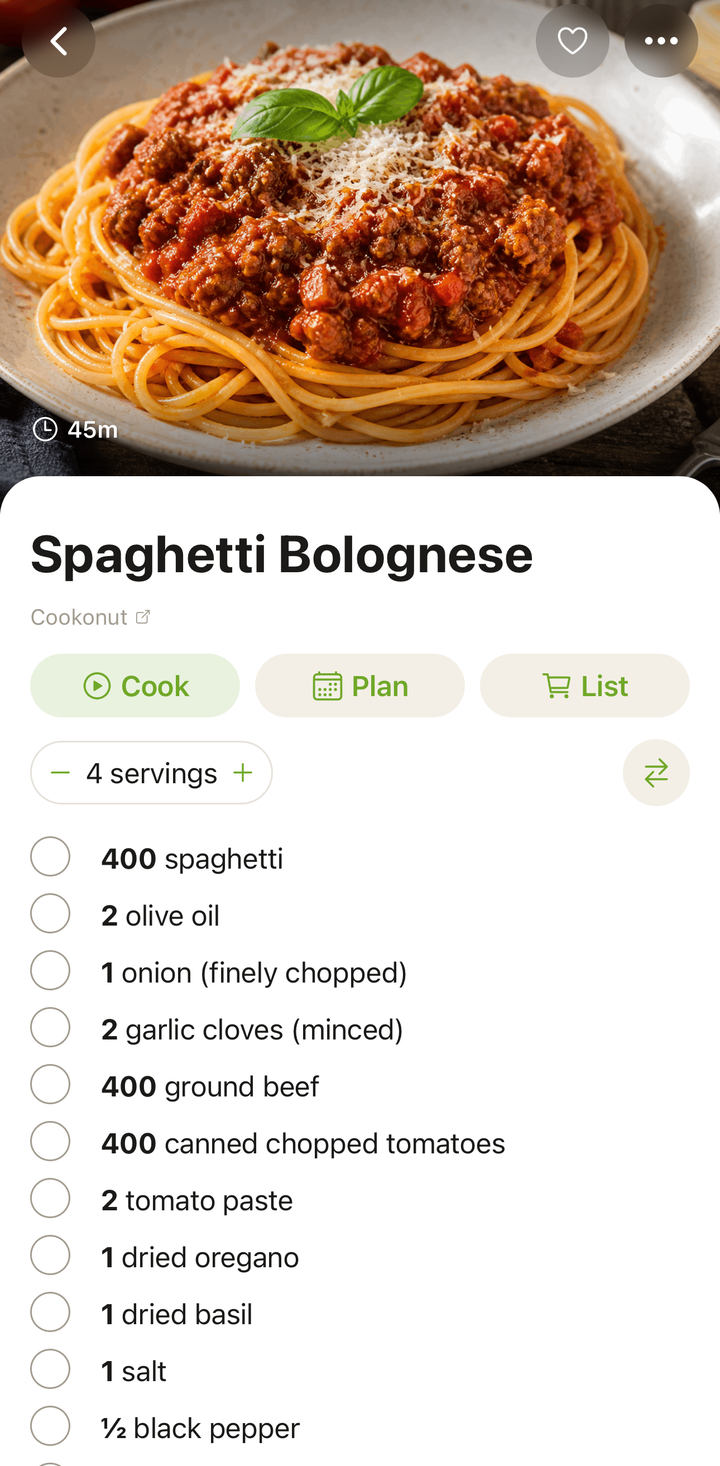
When you import a recipe from a website, Cookonut saves the original source URL alongside the recipe. This means:
- You can always tap the source link to visit the original page
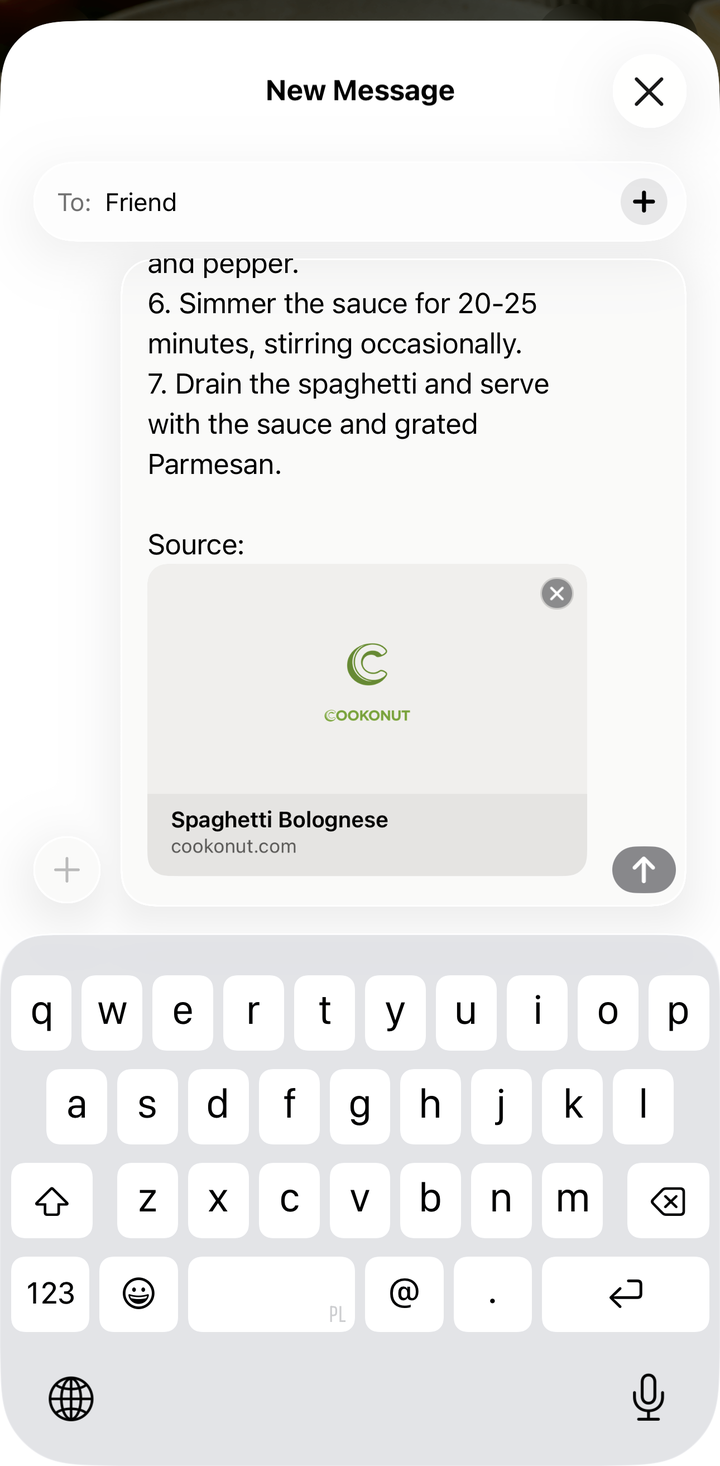
- If you share the recipe, the source is included so others can find the original
- Credit goes back to the original creator
Sharing Features Respect Sources
When you share a recipe from Cookonut — whether via text, email, PDF, or with another Cookonut user — the original source link is included whenever available. This helps ensure proper attribution to the recipe’s creator.
Fair Use Guidelines
Here are some common-sense guidelines for using recipes saved in Cookonut:
- Cooking at home — always fine. That’s what Cookonut is for.
- Sharing with family and friends — sharing a recipe so someone can cook it is a normal, everyday thing. Cookonut’s sharing features make this easy.
- Republishing or commercial use — if you want to publish someone else’s recipe on a blog, website, or in a book, that’s outside the scope of Cookonut. You should get permission from the original author.
- Your own recipes — recipes you create from scratch are yours. Share them, publish them, do whatever you like.
What About Recipe Copyright in General?
Recipe copyright is a nuanced topic. In many jurisdictions, a simple list of ingredients cannot be copyrighted, but the specific written expression of instructions, personal commentary, and accompanying photos can be. Cookonut isn’t a legal advisor — if you have questions about a specific situation, consult a legal professional.
For everyday home cooking, saving and sharing recipes for personal use is widely accepted and is exactly what Cookonut is designed for.
In Summary
- Recipes you save in Cookonut are for your personal use
- Original source links are preserved and included when sharing
- Cookonut doesn’t claim ownership of your recipes
- Recipes you write yourself are entirely yours
- For anything beyond personal use, respect the original creator’s rights
Thanks for your feedback! We're glad it helped.